
Can a power-hungry leader like Duryodhana have terrible consequences in modern politics?
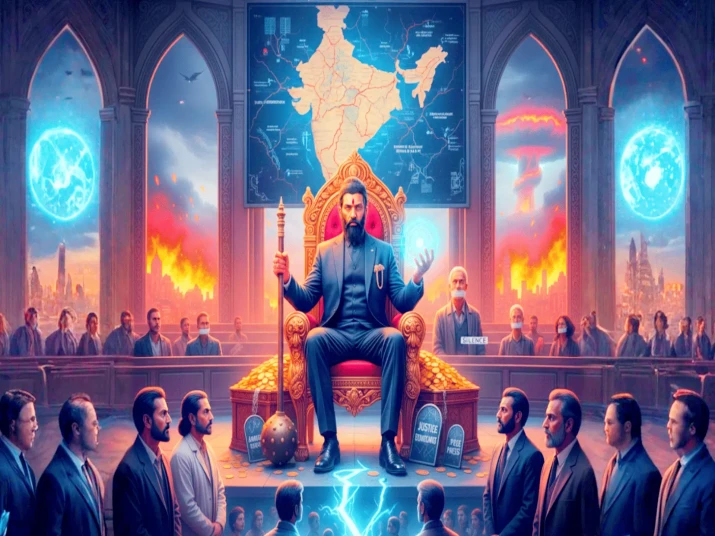
Table of Contents
- Can a power-hungry leader like Duryodhana have a terrible outcome in modern politics?
- Is Duryodhana's friendship with Karna genuine or based on political interests?
- I know religion, but I cannot do it. What is the reason for Duryodhana's confession and spiritual crisis?
- How can Duryodhana's arrogance be explained in the light of the Gita or the Upanishads?
- What kind of harm can following Duryodhana's arrogance and wrong advice cause in today's political system?
- In what areas is Duryodhana's groupism or biased behavior seen in contemporary society?
- What do you think was the main reason for his jealousy and hatred towards the Pandavas?
- How does ignoring the advice of Bhishma, Drona, or Vidura prove Duryodhana's moral downfall?
- If Duryodhana had been less jealous of the Pandavas, would the Kurukshetra War have been avoided?
- How do sibling rivalry and family favoritism have a detrimental effect on modern families?
- How criminal is Duryodhana's role in terms of law, justice, and human rights?
- If revenge and jealousy are the main drivers in life, what kind of disasters can happen to an individual or a society?
- How Arrogance in Leadership Destroys Any Successful Party: Duryodhana's Argument
- What is the biggest lesson in Duryodhana's life for leaders, students, or ordinary people in today's society?
Can a power-hungry leader like Duryodhana have a terrible outcome in modern politics?
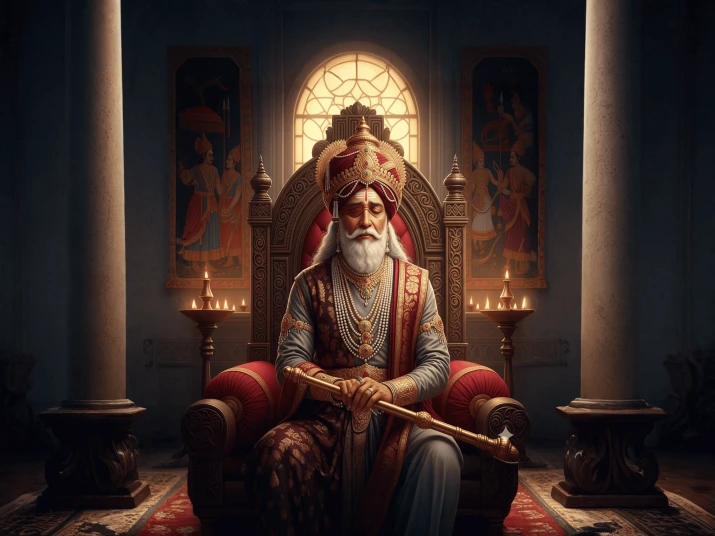
Duryodhana is one of the most important characters in the Mahabharata. He was the prince of the Kauravas. His father was Dhritarashtra and his mother was Gandhari. As the eldest son of Dhritarashtra, he was the forerunner of the evil regime.
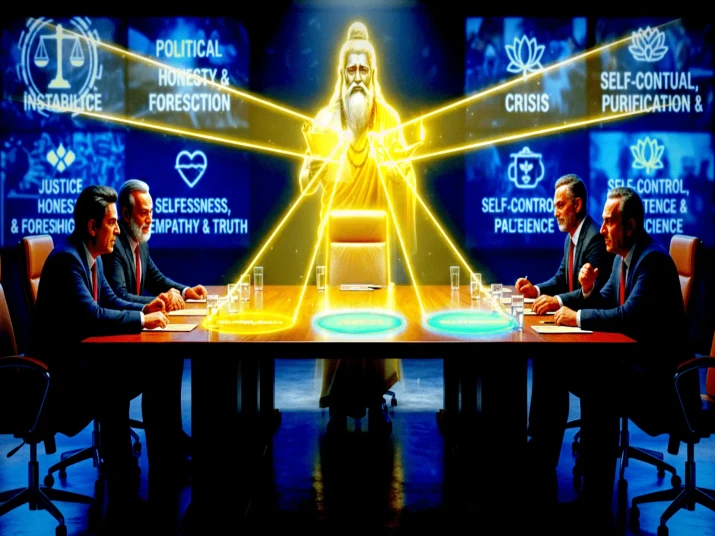
A power-hungry, arrogant, and immoral leader like Duryodhana can have very dire consequences in modern politics as well.
The character of Duryodhana is a historical symbol of the Mahabharata, which extends beyond ancient stories. Its reflection is clearly seen in modern politics as well. When power-hungry, arrogance, and moral degradation become the primary characteristics of leadership, their consequences are not limited to an individual or a party but engulf the entire state and society.
Duryodhana's main problem was his blind addiction to power. He wanted to hold on to the throne at any cost, avoiding the path of justice, reason, and self-criticism. Even in modern politics, when a leader considers power not as a service to the people but as a personal right, then democracy becomes weak. Pressure is created on the constitution, judiciary, and free expression, and dissent is identified as treason.
Such leadership creates deep divisions in society. To maintain power, they divide people based on religion, caste, language, or political identity. As a result, social harmony is destroyed, tolerance decreases, and hatred and violence become normal. Just as the Kaurava-Pandava division led to the Great War, the polarization of modern politics also leads to instability and conflict.
Another dangerous aspect of power-hungry leadership is the spread of corruption and nepotism. Loyalty is prioritized over competence, leading to ineffective administration. The wealth of the state is plundered, and the improvement of the quality of life of the common people is halted.
The most dangerous thing is the lack of moral courage. The fall of Duryodhana was inevitable because wise and powerful people like Bhishma and Drona remained silent despite knowing the injustice. Even in modern society, when intellectuals, institutions, and citizens do not speak out against injustice, power-hungry leadership becomes more reckless.
Therefore, history teaches us that leadership like Duryodhana, although temporarily powerful, ultimately leads to self-destruction and national disaster. Justice, morality, and accountability are what make a state sustainable and humane.
Is Duryodhana's friendship with Karna genuine or based on political interests?
One of the most complex and discussed relationships in the Mahabharata is the friendship between Duryodhana and Karna. The question arises whether this friendship is a pure human feeling or a political relationship based on power and interests? To be honest, both aspects are clearly present in this friendship.
Duryodhana understood from the first sight of Karna that he was extraordinarily talented. Especially in terms of weaponry, he was on par with Arjuna. Having Karna by his side to create a strong position against the Pandavas was a great political advantage for Duryodhana. Therefore, making Karna the king of Angarajaya was undoubtedly a strategic decision. In this, he was able to change the balance of power by attracting a powerful warrior to his side.
However, even though Duryodhana had political interests in mind, his friendship was not just a strategy. He did not see Karna as just a warrior or a tool. He saw a man who was dishonored but possessed of glorious talents. Karna's insult touched him personally. He restored his self-respect by giving Karna the title of king. This human perspective goes beyond political calculations.
On the other hand, Karna also showed such loyalty to Duryodhana that it was not only in exchange for benefits. He remained by Duryodhana's side till the end of his life and did not change his path even after knowing his true identity. To him, Duryodhana was a friend who valued him from the very first day.
So it can be said that the beginning of Duryodhana's friendship may have been related to politics. But with time, it turned into a deep, devoted, and sincere friendship. This relationship in the Mahabharata is a unique mixed reflection of politics and humanity.
I know religion, but I cannot do it. What is the reason for Duryodhana's confession and spiritual crisis?
One of the most profound and psychological statements in the Mahabharata is Duryodhana's statement, "I know religion, but I cannot do it. I know unrighteousness, but I cannot abandon it." This confession is not just a picture of a prince's personal failure. Rather, it is a sharp reflection of his spiritual weakness.
Duryodhana was born strong, strong, and heroic. But spiritually, he was a complex character caught in the conflicting gap between knowledge and action. He knew what was right and what was wrong; what should be done and what should not be done. He understood it clearly. But his inner desires, jealousy, pride, and revenge repeatedly defeated his conscience. This was the root cause of his spiritual weakness.
This statement proves that Duryodhana's problem was not ignorance, but an uncontrolled mind and blind emotions. Spiritual strength is the ability to overcome the unrest within oneself. Duryodhana constantly ignored the right path due to the lack of that power. He had the knowledge of religion, but could not transform that knowledge into action. Because his inner voice was weak, and the outer ego was strong.
This confession of Duryodhana shows us that real power is not in the strength of arms, but in the control of the mind. He was able to gather military strength to win the Kurukshetra War, but he was defeated in his own inner battle. This is how his statement expresses it. Even if there is knowledge, if there is no spiritual strength, a person cannot make morally correct decisions, and ultimately brings about his own destruction.
How can Duryodhana's arrogance be explained in the light of the Gita or the Upanishads?
One of the main characteristics of Duryodhana's character is arrogance. This ultimately pushes him towards moral, mental, and spiritual downfall. The explanation of this arrogance from the perspective of the Gita and the Upanishads highlights a deep spiritual truth.
The Gita says that arrogance is one of the three most dangerous vices of man, which destroys the judgment of man through the passion-induced desire, anger, and greed. 'Ahangarvimurdhatma' means a person blinded by arrogance becomes unable to recognize his own good and bad. Duryodhana is the exact reflection of this condition. He knew what religion is; yet his arrogance kept him away from understanding the truth. Envy towards the Pandavas, excessive pride in his own power. All these consumed his mind, resulting in his sense of justice weakening.
In the Upanishads, the ego is called the result of ignorance. When a person forgets their soul and starts thinking of the body, position, power, and sense-based identity as the self. That is when the ego is born. Duryodhana considered his princely status, power, wealth, and political position as his true identity. In Upanishad terms, he deviated from the path of self-discovery and got caught in the net of external attachments.
In this view, Duryodhana's ego is not just a moral weakness. It was a spiritual blindness, where ignorance about his true nature pushed him towards the path of unrighteousness.
In the light of the Gita and the Upanishads, Duryodhana's ego is the result of ignorance and passion. Which envelop the mind, hide the truth, and lead a person to his own destruction.
What kind of harm can following Duryodhana's arrogance and wrong advice cause in today's political system?
In the Mahabharata, Duryodhana’s arrogance and blind adherence to cunning advisors ultimately led to the downfall of the Kaurava Empire. This ancient truth is equally applicable to today’s corporate or state systems. When leadership is consumed by arrogance and the selection of advisors is based on bias, flattery, or self-interest rather than skill, the seeds of destruction are sown within the system.
First, arrogance biases decisions. In the state system or corporate world, an arrogant leader believes that his own ideas are the ultimate truth. As a result, new ideas are stifled, innovation is stifled, and the growth of the organization is stunted. In the state system, the same arrogance leads policymaking away from reality. The needs of the people disappear, and the state system becomes entangled in inefficiency and waste.
Second, following the wrong advice breaks the system. Just as Duryodhana was influenced by the cunning advice of the serpent and set foot on the path of injustice, so too can the wrong advisors mislead a leader today. In the corporate world, it leads to market loss, abuse, financial loss, or legal complications. In the state, it leads to even more serious corruption, abuse of power, loss of public trust, and political instability.
Third, arrogance and misdirection stifle positive criticism and accountability. When leadership views criticism as hostility, the people who tell the truth in the organization are lost. This rapidly degrades the quality of decision-making.
Therefore, Duryodhana's arrogance and following the wrong advice still warns us today that power is not the key. Morality and informed decision-making are the foundation of sustainable institutions and states.
In what areas is Duryodhana's groupism or biased behavior seen in contemporary society?
One of the weaknesses of Duryodhana's character in the Mahabharata was groupism, i.e., blindly supporting one's own group and considering dissent as enemies. In today's society, this tendency is seen in a new form, on a wider scale.
First, the formation of groups or 'cliques' is very common in educational institutions, schools, colleges, or universities. A group of students tries to influence the decisions of the faculty or administration. Loyalty to a particular group, not merit, plays a major role in determining admission, promotion, or privileges. This spoils the environment, and talent lags.
Second, in corporate offices, leadership or senior officials often give priority to people close to them. In promotions, important projects, and bonuses, everything becomes more important than 'which group' you are in. This results in frustration, internal divisions, and a decline in productivity in the workplace.
Third, groupism takes an open form in politics. Party loyalty becomes the main thing. Ethics, morality, or public interest take a back seat. Like Duryodhana, some leaders blindly support their own side and consider opposing views as enemies, which increases social division.
Fourth, people today cannot tolerate differences on social media. They create ‘groups’ that are in line with their own ideas, and attack those who disagree. Bias is more important than truth.
Therefore, groupism like Duryodhana has spread to families, workplaces, politics, and even the digital society, where people value bias and personal loyalty more than reason.
What do you think was the main reason for his jealousy and hatred towards the Pandavas?
Duryodhana's jealousy and hatred towards the Pandavas were a complex feeling consisting of multi-layered psychological, social, political, and family aspects. The main reasons are clearly explained below:
1. Comparison and inferiority since childhood
Duryodhana saw the strength, intelligence, and fighting skills of the Pandavas, especially Bhima and Arjuna, from his childhood. They were praised from all sides. They were popular in the Gurudwara, the royal court, and even among the common people. This constant comparison created a deep inferiority complex in Duryodhana's mind.
2. Fear of losing superiority
Duryodhana claimed the throne as his birthright. But Yudhishthira's popularity, intelligence, and justice threatened him. He understood that Yudhishthira was the true heir in politics or morality. The fear of losing this throne made him increasingly hateful.
3. The natural popularity of the Pandavas
Duryodhana could never gain the respect or love of the people like the Pandavas. Where the Pandavas gained the trust of the people, Duryodhana received suspicion. This contrast hurt his pride.
4. The influence of evil rule - Shakuni
Duryodhana's character was not weak, but he was prone to influence. Shakuni's cunning advice taught him to see the Pandavas not as rivals, but as 'enemies'. This psychological poison became more concentrated with time.
5. Personal enmity with Bhima
Bhima's strength, mischief, and sometimes harsh treatment towards the Kauravas caused personal hurt in Duryodhana's mind. This pride later turned into hatred.
6. Duryodhana's arrogance versus the qualities of the Pandavas
Duryodhana's arrogance sought superiority, but the morality, skill, and character of the Pandavas did not allow him to reach that place. As a result, jealousy gradually consumed his judgment.
Therefore, Duryodhana's jealousy and hatred towards the Pandavas were not the result of a single cause. It was a long-term mental anguish created by a combination of an inferiority complex, arrogance, political pressure, family rivalry, and bad advice.
How does ignoring the advice of Bhishma, Drona, or Vidura prove Duryodhana's moral downfall?
The most important instructive aspect of Duryodhana's character in the Mahabharata is his moral downfall. He listened to many talented and experienced advisors. Such as Bhishma, Drona, and Vidura, who were wise, patient, and just. But he often ignored their advice. This disobedience is a direct proof of his moral weakness.
First, ignoring Bhishma's advice, Bhishma was steadfast in his commitment to compassion and justice. He repeatedly warned that if the Pandavas were wronged, the Kuru civilization would be in danger. Despite this, Duryodhana did not listen to him due to his own pride and jealousy. This shows that he valued his own pride more than justice and religion.
Secondly, ignoring Drona's advice, Drona showed Duryodhana the best path through his weaponry and strategy. But Duryodhana ignored the advice, attracted only by power and competition. This shows that he failed to respect knowledge and skill.
Thirdly, ignoring Vidura's fair advice, Vidura repeatedly warned that violating the rights of the Pandavas would lead to the destruction of politics and society. Duryodhana disregarded his advice. This shows how weak he was from a moral and spiritual point of view.
Refusing to listen to these three experienced advisors shows Duryodhana's arrogance, jealousy, and selfishness. This is not just a personal mistake. It is clear evidence of moral decline. The result of his decision is the destruction of the Kauravas and his own misery. It shows that disobedience to moral guidance leads to disaster in the long run.
If Duryodhana had been less jealous of the Pandavas, would the Kurukshetra War have been avoided?
The Kurukshetra War in the Mahabharata was not fought solely for the throne or power. Rather, it was also a major part of personal jealousy, pride, and moral weakness. Duryodhana's excessive jealousy and hatred for the Pandavas were the main reasons for the war. He saw the Pandavas' competence and righteousness as a threat to himself and wanted to counter this threat with power, revenge, and violent plans.
If Duryodhana had been less jealous, his behavior could have been a mere slur of political strategy and fairness. He might have agreed to a peaceful compromise with the Pandavas, a partial sharing of power, or a peaceful distribution of the throne. In such a situation, the great slaughter of Kurukshetra could have been avoided. The precondition for the war was Duryodhana's arrogance and his contempt for the rival Pandavas.
However, it was not enough to reduce jealousy alone; on the other hand, the evil spirits and such advisors influenced Duryodhana's morale and decisions. Therefore, to establish peace, the influence of his strategic advisors as well as his arrogance had to be limited.
In conclusion, if Duryodhana had been less jealous of the Pandavas, the conflict in the Kurukshetra War could have been reduced to a great extent. This shows that personal jealousy and arrogance have a destructive effect not only on the individual but also on the entire society or state. The main lesson of war is that when personal feelings and interests override morality and conscience, chaos and destruction are inevitable.
How do sibling rivalry and family favoritism have a detrimental effect on modern families?
The story of the Mahabharata shows us how sibling rivalry and family favoritism can have a destructive effect in the long run. The character of Duryodhana is the best example of this. In the Kuru family, he did not show an impartial and unfair attitude towards the Pandavas. Rather, he was partial to his own relatives, the Kauravas. Seeing the strength, intelligence, and wisdom of the Pandavas in his childhood, Duryodhana became jealous. This rivalry gradually took the form of jealousy, pride, and hatred.
Favoritism is even more harmful. King Bhishma and Dhritarashtra also increased the division in the family by giving Duryodhana excessive support and imposing certain limits on the Pandavas. When Duryodhana took strategic and illegal actions against his brothers, trust and relationships in the family were broken. In addition, biased behavior undermines justice, which in turn leads to unrest and conflict in the larger society.
The same trend is seen in modern families. If parents show excessive favoritism towards a child or constantly compare siblings, it leads to loss of self-esteem, distance in relationships, mental stress, and long-term personality problems. For example, Duryodhana led the Kuru family to disintegration and destruction.
In conclusion, the example of Duryodhana teaches us that it is natural for brothers to have natural competition, but biased behavior and uncontrolled jealousy weaken family bonds and lead to widespread conflict and harm in society.
How criminal is Duryodhana's role in terms of law, justice, and human rights?
In the context of the Mahabharata, the incident of Draupadi's humiliation is not only a personal injury but also a serious crime from the perspective of society, justice, and human rights. Duryodhana's role here is very critical. He not only approved of this incident out of revenge and pride against the Pandavas, but also actively supported them.
From the perspective of law, this act of humiliation of Draupadi was a specific wrong and a violation of the law. Trying to humiliate a woman in the eyes of the public by stripping her naked in front of everyone was a clear crime. Duryodhana is seen as the main instigator and supporter of this crime.
From the perspective of justice, Duryodhana's behavior is destructive. Justice is that no one should be disobeyed or humiliated for the sake of power or political influence. Taking Duryodhana's side and trying to oust Draupadi proves that he did not value justice and principles.
In the light of human rights, the act of depriving Draupadi of her dignity and security is essentially a violation of gender and human rights. Duryodhana was actively involved in this incident, and by approving it, he set a precedent of ignoring women's rights, even against powerful leaders in society.
Finally, Duryodhana's role in the act of insulting Draupadi is criminal in all aspects of law, morality, and human rights. It is not just a personal or family mistake but a social and moral disaster. It provides an important warning not only in the history of the Mahabharata but also as a moral lesson for humanity.
If revenge and jealousy are the main drivers in life, what kind of disasters can happen to an individual or a society?
The character of Duryodhana in the Mahabharata clearly shows us that when revenge and jealousy become the main drivers in life, it have a destructive effect on both the individual and society. Duryodhana's unwavering hatred and vengeful attitude towards the Pandavas not only caused his own downfall. Rather, it pushed the entire Kuru community to the brink of conflict and death.
If revenge and jealousy are the main driving forces in a person's life, their mental peace is destroyed. Jealousy and pride distract him from rational thinking, relationships weaken, and morality deteriorates. A person like Duryodhana does not hesitate to harm others for his own ego and desires. This often creates frustration, isolation, and a lack of social acceptance in his personal life.
In society, when a leading individual or group seeks to avenge and feel jealousy, conflict, unrest, and increase. Law, justice, and morality are ignored. Duryodhana's strategy, which was intended to harm the Pandavas, pushed the entire kingdom towards destruction. Similarly, in modern society, personal or political revenge and jealousy can give rise to greater conflict, disintegration, and instability.
When revenge and jealousy become the main drivers of life, the individual falls morally and mentally, and the path to chaos, fear, disunity, and destruction is paved in society. The story of Duryodhana warns us that even personal feelings, if not controlled, can lead to collective disaster.
How Arrogance in Leadership Destroys Any Successful Party: Duryodhana's Argument
Duryodhana of the Mahabharata symbolizes a fundamental weakness in leadership: Arrogance. Arrogance in leadership becomes dangerous when a leader considers his own power, opinions, and decisions to be unchangeable. He ignores the advice of others and prioritizes his own personal feelings over the welfare of the party. Duryodhana's leadership is a clear example of such arrogance.
First, Duryodhana's arrogance prevented him from listening to his senior and experienced advisors. If he had accepted the advice of Bhishma, Drona, and Vidura, the Kurukshetra War could have been avoided entirely. But arrogance led him to believe that he was right and that no one had the right to challenge his opinions. This stubbornness broke the unity of the party and brought about disasters like war.
Second, the leader with arrogant leadership created a culture of fear within the party. No one in Duryodhana's court dared to speak against him. As a result, wrong decisions were not corrected, but instead led to greater disasters over and over again. A party that cannot tell the truth to its leader can never survive in the long run.
Third, Duryodhana's ego forced him to put personal animosity above the interests of the state. Although his hatred for the Pandavas was personal, its result was a huge state disaster. This shows that the arrogant leader puts his own emotions above the future of the nation, which is the most dangerous failure of leadership.
Arrogance in leadership creates blindness in decision-making, destroys internal unity, and leads the party or state to war, division, and collapse. Duryodhana established this truth as an inevitable lesson through his life.
What is the biggest lesson in Duryodhana's life for leaders, students, or ordinary people in today's society?
Duryodhana of the Mahabharata is not just a rival for a princess, but a picture of human nature's pride, jealousy, and selfishness. The biggest lesson in his life is: pride, revenge, favoritism, and disregard for justice destroy oneself in the long run.
For leaders in today's society, Duryodhana's life is a warning. If a leader ignores morality, public welfare, or prudent advice to maintain power, then the party or the state faces destruction. Arrogant leadership like Duryodhana's creates enemies, breaks internal unity, and fails to accept critical advice. This is directly applicable to modern political and corporate structures.
For students, Duryodhana's life teaches that knowledge is not enough. Talent without ethics, control, and goodwill can be destructive. The blind tendency of pride and competition distorts the purpose of education and weakens personal relationships.
It is also an important lesson for ordinary people not to let personal jealousy, envy, or revenge be the main driver of life. It is necessary to be aware of avoiding inequality, division, and long-term damage in relationships, families, or society.
Duryodhana's life teaches us that no matter how great the pride and selfishness, justice, taking careful advice, and prioritizing human values are the most lasting and fruitful paths. This lesson is equally applicable to today's leaders, students ,and ordinary people.
Tags
For Add Review. You Need To Login First Login Page
Related News
-
LATEST
-
POPULAR

What is marriage according to Sanatan Dharma and why is marriage called a bond of birth and rebirth?

The Sydney attack is also the result of the same petro-dollar, Pakistan and Deep State radical narratives.
Comments
No comments yet